👣Following in Footsteps
During my maternity leave, a family-tree project led me to an unexpected discovery: some of our ancestors had emigrated to Canada from Britain. Months later, when life felt less overwhelming, I revisited that detail with my sister. Together, we uncovered something extraordinary — a great-great-aunt, Ethel Jane Stanley Pounce, who left London, UK in 1910 for Galiano Island, BC to build a new life. As a British immigrant now raising my own child on Vancouver Island, her courage and isolation resonated deeply. This story became lost in my own family and documenting is my way of honoring her resilience and drawing connections between her journey, my own, and all the women experiencing motherhood in an unfamiliar life.
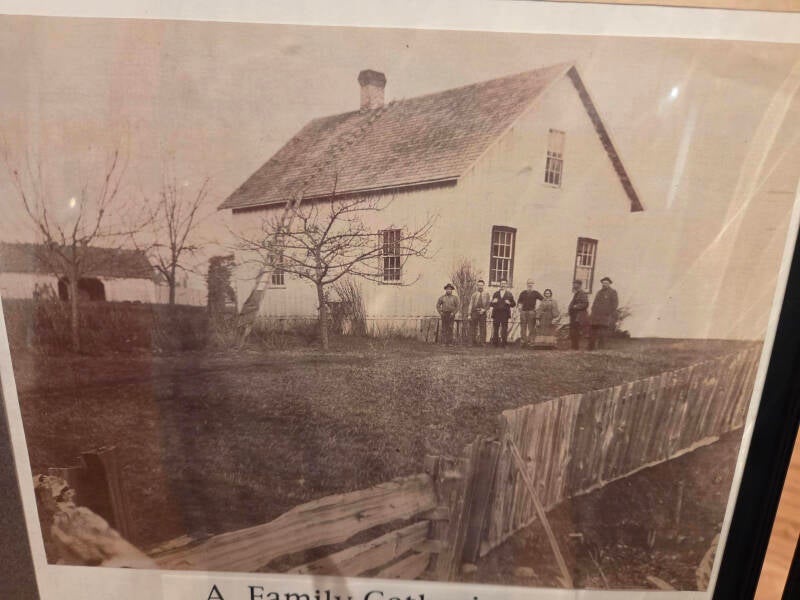
The Murcheson house (Ethel's in-law family), Galiano Island Circa 1910. It is believed the woman is her mother-in-law, Mary Murcheson next to Finlay Murcheson Sr.
Credit: Galiano Island Museum
🫖💂🏻♂️👑Early life in England
Ethel Jane Stanley Pounce was born in 1880 in Paddington, London, during a period of rapid growth, industrial change, and deep social inequality. One of approximately eight children, she grew up in this bustling city during the reign of Queen Victoria where opportunity and hardship lived side by side. After her father died of tuberculosis—a common and devastating illness of the era— the family's florist business dissolved — and her mother, Rosamund, worked endlessly to secure futures for her sons and daughters, eventually running a lodging house in Bognor Regis, Sussex, UK. Ethel worked in London by herself during this period, shaped by the resilience, responsibility, and limited opportunities available to women in late-19th-century Britain.

The Empress of Britain (1905) that Ethel later travelled on Reference
#/media/File:Every_boy's_book_of_railways_and_steamships_(1911)_(14572580797).jpg)
🟥 🍁 🟥 A New life in Canada
In 1910, Ethel Jane Stanley Pounce left London during a time when thousands of Britons were emigrating to Canada in search of opportunity and stability. She likely travelled alone by rail first to Liverpool then across the Atlantic by the steamship called the Empress of Britain —a journey that took several weeks and offered little comfort. She then headed for Victoria were she was recorded to stay overnight in the Dominion Hotel. Heading for remote Galiano Island, she would have first arrived by taking a paddle-wheeler style boat and then would have been met in an active pass closer at Galiano Island by a rowboat. Arriving in a rugged, sparsely populated landscape full of trees, farms and loggers, it must have been a stark contrast to industrial London, and totally overwhelming. Ethel came to support her uncle after the death of his wife (Emma Cordelia Stanley - Rosamund's sister) as a housekeeper during a time when across Mayne and Galiano Island there were under 100 inhabitants only.


1. The home Ethel eventually married into, The Murcheson's home. Reference
2. A postcard picture reflecting the Dominion Hotel in 1910, when Ethel arrived. Reference
📜Quiet Legacy
Ethel built a quiet but remarkable legacy on Galiano Island. After marrying pioneer Finlay Murcheson Jr. in 1913, she raised seven children, embedding her family deeply into the island’s early pioneer history. She likely never returned to England, instead creating a life shaped by resilience, isolation, and community—experiences shared by many extraordinary European pioneer women of her time. Her legacy lives on through Canadian generations who grew from her unwavering courage. As a mother raising my own child far from home, I feel her story echoing through my own: a reminder of the strength, sacrifice, and determination carried by women who begin again.
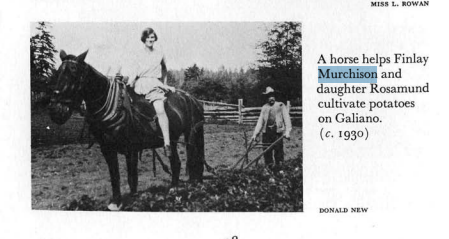

💭Reflections
Learning about Ethel has reshaped both my journey as a mother and my sense of identity. Her courage—raising seven children far from home, without support or modern comforts—softens my own moments of overwhelm and reminds me of the strength women carry. I once thought only my great-aunt Olive had emigrated permanently, but discovering that her father travelled repeatedly and that two generations of women in our line before her also crossed the Atlantic revealed something deeper: I am part of a long line of migrants. Realizing I’m, in many ways, fourth-generation Canadian has grounded me in a proud, evolving Canadian-British identity and is a reflection I will be passing onto my daughter.
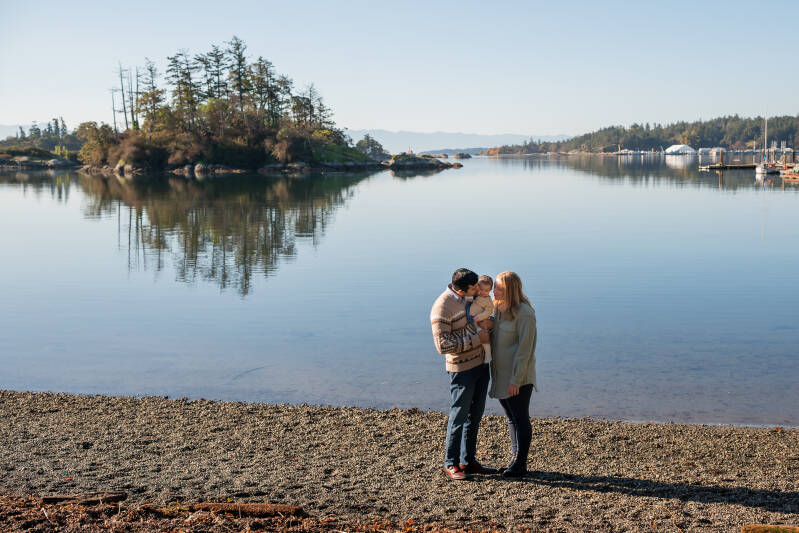
In honour and in total awe of:
Ethel Jane Stanley Pounce Murcheson (1880-1979)
May your story never be forgotten.

The grave of Ethel Jane Stanley Pounce Murcheson. Reference
Acknowledgements and References
- To my husband Amandeep Hundal and my daughter Kira Hundal for taking me on this beautiful Canadian adventure and on the journey of motherhood, the inspiration that started all this.
- We are totally indebted to Lucy Curtis, UK, Sussex for her passionate and hard work on genealogy, oral interview accounts and photo collections. Without her, uncovering this story would not have been possible.
- Accounts, information and photos from my Gran, Barbara Burnham, UK, Sussex. Thank you!
- Genealogy and accounts from descendants Danny and Jackie Eddy Canada, BC
- Accounts, information and pictures from Charlene at Galiano Island Museum
- "Galiano Houses and People looking back to 1930" written and illustrated by Elizabeth Steward
- Everyone who provided information through Facebook Group: Galiano Island Photo Album from the Past
Add comment
Comments